
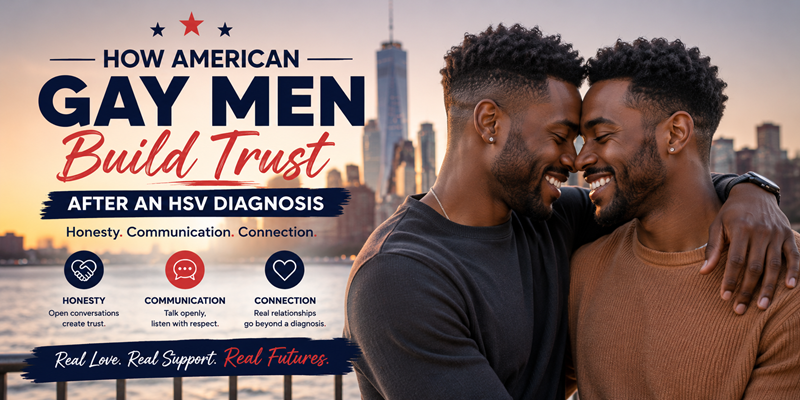
How American Gay Men Build Trust After an HSV Diagnosis
An HSV diagnosis can feel overwhelming, especially when it comes to dating and relationships. Many American gay men worry that herpes will define their future or make it difficult to build meaningful connections. The reality is very different. Thousands of gay men with HSV have healthy relationships based on honesty, communication, and mutual respect.
Trust is not built by having a perfect medical history. It is built through authenticity, consistency, and emotional openness. While herpes may change how conversations happen, it does not prevent lasting love or meaningful companionship.
Why Trust Matters More Than HSV Status
Every successful relationship depends on trust. Whether someone has HSV or not, healthy relationships require honesty, respect, empathy, and communication.
Many people assume that herpes is the biggest challenge in dating. In reality, poor communication, dishonesty, and unrealistic expectations often cause more relationship problems than HSV itself.
For gay men living with HSV, being transparent about their diagnosis can actually strengthen relationships. Honest conversations demonstrate maturity and create a foundation for long-term trust.
Accepting Yourself Before Dating Again
Building trust with someone else begins with rebuilding confidence in yourself.
Many newly diagnosed people experience guilt, shame, or fear of rejection. These feelings are common but usually lessen with education and support.
HSV is an extremely common viral infection. According to the U.S. Centers for Disease Control and Prevention (CDC), millions of Americans live with herpes, and many never experience noticeable symptoms. Learning accurate medical information helps replace fear with confidence.
Self-acceptance allows you to approach dating from a place of confidence instead of anxiety.
Choose the Right Time to Share Your Diagnosis
Disclosure is one of the most emotional parts of dating with HSV.
There is no universal timeline, but most relationship experts recommend discussing HSV before sexual intimacy rather than during the first few messages.
The conversation should happen when both people feel comfortable enough to have an honest discussion.
Many people discover that their partners appreciate openness and responsibility. Sharing your diagnosis demonstrates respect and allows both individuals to make informed decisions together.
Focus on Facts Instead of Fear
Many people know very little about herpes.
When discussing HSV, explain the facts calmly rather than apologizing for having the virus.
You might mention:
- HSV is common.
- Many people have mild or no symptoms.
- There are effective antiviral medications.
- Preventive measures can significantly reduce transmission risk.
- Honest communication helps couples make informed choices.
A calm, factual discussion often reduces anxiety for both people.
Build Emotional Intimacy First
Strong relationships rarely begin with physical attraction alone.
Take time to learn about each other’s personalities, interests, goals, and values.
Shared experiences help establish emotional trust long before conversations about sexual health become necessary.
Many successful couples say emotional compatibility became much more important than medical conditions.
When someone appreciates who you are as a person, HSV becomes only one small part of the relationship.
Look for Partners Who Value Honesty
Not everyone responds the same way to disclosure, and that’s okay.
The right partner values honesty more than perfection.
Someone who reacts with kindness, asks respectful questions, and wants to understand your experience is demonstrating qualities that support healthy long-term relationships.
Remember that rejection is not always about HSV. People choose partners for countless reasons, and compatibility involves much more than health status.
Join Communities That Understand Your Experience
Meeting people who understand HSV can reduce anxiety and increase confidence.
Many gay men feel more comfortable connecting through HSV-focused dating communities because everyone shares similar experiences and understands the importance of respectful communication.
These communities often provide educational resources, discussion forums, privacy features, and opportunities to build friendships before pursuing romantic relationships.
Knowing you’re not alone can significantly improve emotional well-being.
Practice Honest Communication Throughout the Relationship
Trust doesn’t end after disclosure.
Healthy relationships continue to grow through regular communication.
Discuss questions openly, share concerns without judgment, and make decisions together regarding sexual health and protection.
Being consistent, dependable, and emotionally available strengthens relationships far more than trying to appear perfect.
Partners appreciate honesty even when conversations feel uncomfortable.
Protect Your Mental Health
Living with HSV can sometimes affect confidence and emotional health.
Consider building a support system that includes trusted friends, LGBTQ+ community organizations, healthcare providers, or support groups.
Professional counseling can also help address anxiety, shame, or relationship concerns following a diagnosis.
Mental well-being plays a major role in creating healthy romantic relationships.
When you feel emotionally secure, you’re better prepared to build trust with someone else.
Learn Together as a Couple
Many couples grow stronger by learning about HSV together.
Reading reliable medical resources, discussing prevention strategies, and asking healthcare professionals questions can eliminate myths and unnecessary fear.
Instead of viewing HSV as a barrier, many couples see it as an opportunity to practice honesty, teamwork, and mutual respect.
Shared knowledge often strengthens emotional intimacy.
Healthy Relationships Are Built Every Day
Across the United States, countless gay couples successfully navigate relationships where one or both partners have HSV.
Their success comes from openness, compassion, education, and consistent communication—not from avoiding difficult conversations.
Trust develops gradually through everyday actions, honesty, and emotional support.
An HSV diagnosis may become part of your story, but it does not determine your future or your ability to experience love.
The relationships that last are those where both people choose understanding over judgment and connection over fear.
Conclusion
Building trust after an HSV diagnosis takes courage, but it is entirely possible. American gay men continue to find meaningful relationships by embracing honesty, educating themselves, and communicating openly with potential partners.
HSV is only one aspect of your health—it does not define your personality, values, or ability to love. With confidence, accurate information, and the right partner, lasting relationships remain well within reach.
If you’re looking for a community where openness and respect come first, an HSV-focused dating platform can provide a supportive environment to meet other gay singles who understand your journey and are interested in building genuine, long-term connections.
Frequently Asked Questions
Is it possible for gay men with HSV to have healthy relationships?
Yes. Many gay men with HSV have successful long-term relationships built on communication, trust, and informed decision-making.
When should I tell someone I have HSV?
Most healthcare professionals recommend discussing HSV before sexual intimacy, once trust has begun to develop.
Will everyone reject me because of HSV?
No. Many people appreciate honesty and are willing to learn the facts before making decisions about a relationship.
Can medication reduce HSV transmission?
Yes. Daily antiviral medication, along with safer sex practices and avoiding intimacy during outbreaks, can significantly reduce the risk of transmission. Consult a healthcare provider for personalized advice.
